
Read the Korean first
Give yourself a chance to identify familiar words and grammar before checking a translation. This strengthens direct comprehension.
BEGINNER KOREAN READING
Move from recognising Hangul to understanding complete Korean sentences. Practise with short passages, useful vocabulary and reading that is challenging enough to teach you something without turning every line into a dictionary emergency.
READ WITH A PURPOSE
Good reading practice teaches you to notice sentence structure, endings and context while gradually increasing the amount of Korean you can understand without English support.
Give yourself a chance to identify familiar words and grammar before checking a translation. This strengthens direct comprehension.
Save words that actually appear in passages and use them in your own sentences so reading and vocabulary practice reinforce each other.
Underline particles, connectors and endings. Reading becomes easier when you recognise how the sentence is built instead of treating it as one long mystery.
THE BOOK
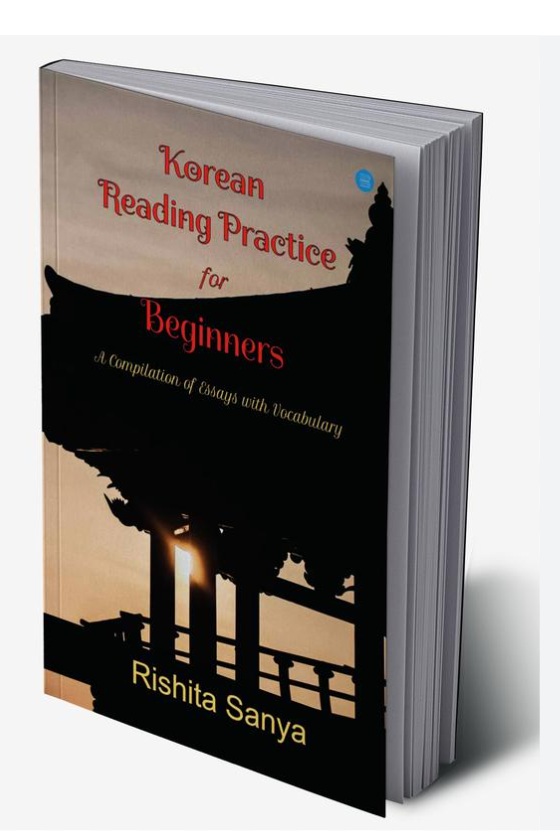
Created by Rishita Sanya, the book is designed to help beginner learners practise Korean through readable passages and useful vocabulary in context.
Try the Hallyu Heights beginner reading passage about a Saturday at a café, with translation, vocabulary and comprehension support.
TRY FREE READING PRACTICE →MAKE READING EASIER
Reading improves faster when words you studied in flashcards reappear inside sentences and then come up again in speaking or class.
Preview a small set of words from the passage so unfamiliar vocabulary does not interrupt every sentence.
Mark what you understand, circle only the words that block meaning and keep moving instead of translating everything.
Summarise the passage in one or two simple sentences and reuse a few new words in your own Korean.
NEED GUIDANCE?
Practise pronunciation, sentence structure and comprehension with direct feedback instead of guessing where you went wrong.
KEEP EXPLORING